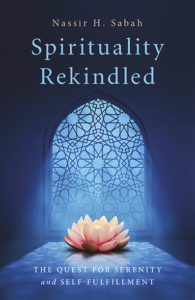
Nassir H. Sabah
In addition to the mystical numbers 7 and 19, as well as the perfect numbers 6 and 28(1), other numbers have special significance in the Quran, as presented in what follows.
Oneness and Uniqueness of Allāh
An interesting number that illustrates the Oneness and Uniqueness of Allāh is the palindrome 10101, obtained by dividing a sequence of 1s, symbolizing His Oneness, by the mystical 19 and regrouping the quotient sequence of 01s(2). The most significant and least significant 1s symbolize “He is The First and The Last”. The middle 1 between 0s symbolizes “He is the One and Only, nothing (zero) is before Him and nothing is after Him”. The number 10101 has several derivatives that are of significance in the Quran, such as 10, 11, 101, 111(3).
The number 17
The number 17(4) is the 7th in the sequence of prime numbers and the sum of the first 4 primary numbers (2, 3, 5, 7), ending with the number 7. Is also the number of mandated daily prayer cycles (ruka῾a رُكَع). The number 17 is a factor of 119 = 7×17, which is the number of mandated weekly prayer cycles. The number of 119 is significant in its own right: its digit sum is 11, its two most significant digits are also 11, and its two least significant digits are the mystical 19.
The number 23
23, the number of years over which the Quran was revealed, figures prominently in many numerical relations in the Quran(5). The digit sum of the number of chapters of the Quran (114) and the count of its numbered verses (6236) is 23. The numbers 2 and 3 are the middle digits of 6236 and are the prime factors of the first perfect number 6.
Prime numbers and functions
Prime numbers, other than the ones already mentioned, also play a significant role in many numerical relations in the Quran. For example:
(i) In the most important Chapter 1, the number of verses (7), the number of words (29), and the number of letters (139) are all prime numbers. The digit sums of these numbers (7 + 11 + 13 = 31) are also prime numbers which add to a prime number (31). Moreover, the concatenations of 7, 29, and 139 as 729139 or in the reverse order as 139297 are also prime numbers.
(ii) If the prime-numbered verse counts of chapters are considered indices of prime numbers and are added to the corresponding verse counts, the total is 6236, the count of numbered verses in the Quran(6).
(iii) The prime-counting function, π(x), defined as the function counting the number of prime numbers less than or equal to some real number x, can be applied to derive the number of elephant chromosomes from numbers in Chapter 105 of the Quran(7).
Palindromic numbers
The aforementioned sequences of two or more 1s symbolizing the Oneness of Allāh, such as 11 and 111 are examples of palindromic numbers: they are the same when written forwards or backwards.
An interesting palindrome is 949. Its two least significant digits are 49 = 7×7, and its two most significant digits are 94 = 2×47, where the digit sum of 47 is 11. The digit sum of 949 is also 22 = 2×11. 949 can be expressed as the sum of 3 palindromic numbers: 949 = 1 + 161 + 787, where the prime-counting function, π(949) = 161, that is, there are 161 prime numbers less than 949, and 787 is the 138th prime number, where 138 is the product of two special numbers, 6 and 23, as previously discussed. 949 can be expressed as the sum of two different pairs of squares: 949 = 7×7 + 30×30 = 49 + 900, where the digit sum of 49 and 900 is also 22, and 949 = 18×18 + 25×25 = 324 + 625, where the digit sum of 324 and 625 is again 22. The 949th verse of the Quran is Verse 160, Chapter 6, which states: “Whoever comes with a good deed will be rewarded tenfold. But whoever comes with a bad deed will be punished for only one. None will be wronged.” مَن جَآءَ بِٱلْحَسَنَةِ فَلَهُۥ عَشْرُ أَمْثَالِهَا ۖ وَمَن جَآءَ بِٱلسَّيِّئَةِ فَلَا يُجْزَىٰٓ إِلَّا مِثْلَهَا وَهُمْ لَا يُظْلَمُونَ. The Chapter number is the first perfect number 6 and the digit sum of the Verse number 160 is 7. The product of the Chapter number and the Verse number is 6×160 = 960. The verse speaks of ten rewards and one punishment, that is, 11 retributions. 960 – 11 = 949, the verse number in the Quran
Examples of palindromic numbers encountered in numerical relations in the Quran are:77
- 66 = 6×11 is encountered in connection with perfect squares in the Quran(10) and in connection with the Bamallah(3).
- 77 is encountered in connection with the first and last occurences on the number 7. It is a double 7 and a multiple of 11(11).
- 131 is encountered as a prime factor in connection with Chapter 112(3).
- 151 is encountered as a prime factor in connection with Chapter 112(3) and the First Chapter(4). The digit sum of 151 is 7.
- 181 is the sum of the verse numbers and chapter numbers of the two verses in the Quran that refer to the flights of birds in the sky: (16:79) and (67:19), where 16 + 79 + 67 + 19 = 181. Note that the two chapter and verse number combinations consist of the same four numerals (1, 6, 7, and 9) and that the digit sum of each combination is 23, the number of years over which the Quran was revealed, and 2 and 3 are the prime factors of 6, the first perfect number. 181 is preceded by 8 palindromic prime numbers (2, 3, 5, 7, 11, 101, 131, and 151) and is itself the 8th odd palindromic number. The digit sum of 181 is 10, and 181 is the 10th strobogrammatic number, being preceded by 0, 1, 8, 11, 69, 88, 96, 101, and 111, where a strobogrammatic number stays the same when rotated through 180 degrees.
- 191 is encountered as a prime factor in connection with Chapter 112(3). The digit sum of 191 is 11. The number 191 involves the two principal mystical numbers of the Quran, 7 and 19(1). Thus, 191 is the concatenation of 19 and 1, or the concatenation of 1 and 91 = 7×13 where 13 is 6th prime and 6 is the first perfect number.
- 383 is encountered in connection with Chapter 36(9). Its digit sum is 14 =7×2.
- 676 (26×26) is the sum of the verse counts of chapters whose numbers are perfect squares, and is itself a perfect square whose digit sum is 19(10).
- 919 is the sum of the verse counts of the 4 chapters of the Quran that have more than 200 verses each: 2(286), 3(200), 7(206), and 26(227), where 286 + 200 + 206 + 227 = 919. The digit sum of 919 is 19, and it involves the numbers 7, 13, and 19 in the same manner as was discussed preciously for the number 191. Moreover, 919 is itself the 19th palindromic prime number (2, 3, 5, 7, 11, 101, 131, 151, 181, 191, 313, 353, 373, 383, 727, 757, 787, 797, and 919). The sum of the chapter numbers having more than 200 verses each is 2 + 3 + 7 + 26 = 38 = 2×19. Moreover, 919 is the 157th prime number, where 157 is a prime number that is the concatenation of 1 and 57 = 3×19.
- 31313 is encountered in connection with the Oneness of God(12). Its digit sum is 11.
- 11011, and 1112111 are encountered in connection with patterns of 1s(2).
Can all this be coincidental?
(1) See the article “Mystical and Perfect Numbers in the Quran”, under Insights/Supplements/Numerical Miraculousness on this website.
(2) See the article “Authenticity of the Quran – Patterns of 1s and 19s”, under Insights/Supplements/ Numerical Miraculousness on this website.
(3) See the articles “Chapter 112 of the Quran: al-Ikhlāṣ”, “Authenticity of the Quran: The Basmalah”, and “Shortest Surah of the Quran”, under Insights/Supplements/Numerical Miraculousness on this website.
(4) See the article “Authenticity of the Quran: The First Chapter”, under Insights/Supplements/Numerical Miraculousness on this website.
(5) See the article “Authenticity of the Quran: Numbers of Chapters and Verses”, under Insights/Supplements/Numerical Miraculousness on this website.
(6) See the article “Pattern of Prime Numbers in the Quran”, under Insights/Supplements/Numerical Miraculousness on this website.
(7) See the article “Number of Chromosomes in Humans and Animals”, under Insights/Supplements/Numerical Miraculousness on this website.
(9) See the article “Marvels of Chapter 36 Yā Sīn”, under Insights/Supplements/Numerical Miraculousness on this website.
(10) See the article “Perfect Squares in the Quran”, under Insights/Supplements/Numerical Miraculousness on this website.
(11) See the article “First and Last Occurrences of the Number 7 in the Quran”, under Insights/Supplements/Numerical Miraculousness on this website.
(12) See the article “Oneness of God”, under Insights/Supplements/Numerical Miraculousness on this website.